
Understanding PLR Licensing: MRR, RR, and High-Value Private Label Rights
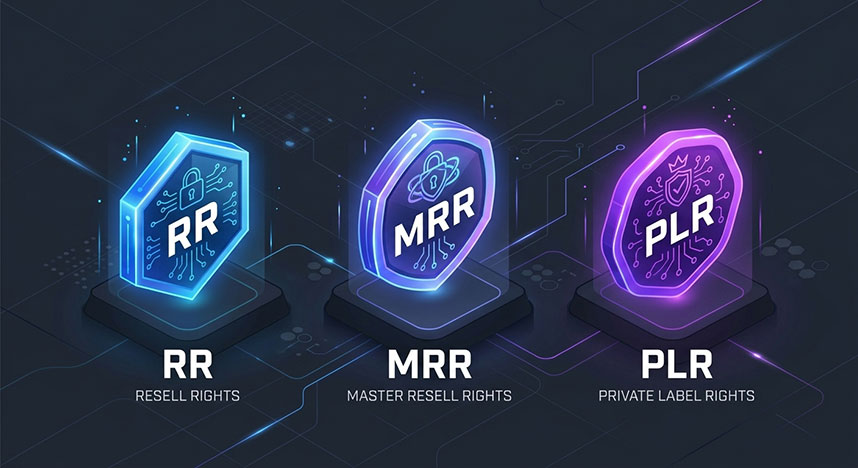
Navigating the digital product ecosystem requires a clear, uncompromising understanding of rights and licenses. For digital entrepreneurs, acquiring pre-built content is one of the fastest ways to expand a product catalog, launch new sales funnels, and generate revenue. However, not all digital rights are created equal. Entering the market without understanding the legal and operational differences between Resell Rights (RR), Master Resell Rights (MRR), and High-Value Private Label Rights (PLR) can lead to brand dilution, severe price wars, and lost long-term profits.
The core problem lies in how these digital assets are packaged and distributed. While some rights models lock you into rigid distribution chains where you act as a mere reseller, high-value models grant you the legal flexibility to alter the source code, rewrite the underlying text, and rebrand the product as your own. In this comprehensive guide, we will break down each licensing model, evaluate their strategic advantages, analyze common pitfalls, and explain why high-value PLR is the ultimate lever for building a sustainable, sovereign digital enterprise.
1. Resell Rights (RR): The Basic Redistribution Model
Resell Rights (RR) give you the legal authorization to sell a finished digital product directly to end customers. Under a standard RR license, your role is strictly limited to that of a distributor or retailer. You purchase a completed PDF, audio package, or software tool, and you are permitted to keep 100% of the sales revenue from your direct customers.
- What you CAN do: Sell the product in its original, unaltered format to customers who plan to consume the content strictly for personal use.
- What you CANNOT do: Edit the core content, claim authorship, rebrand the visual identity, alter the source files, or allow your buyers to resell the product to others.
The Strategic Reality: While Resell Rights allow for quick deployment without creation overhead, they offer zero operational flexibility. Because every marketer purchasing the same RR license offers the exact same unaltered file, competition is fierce. Sellers quickly resort to slashing prices to attract buyers, causing the product's market value to collapse in a race to the bottom.
2. Master Resell Rights (MRR): The Multi-Tier Chain
Master Resell Rights (MRR) take the redistribution model one step further by introducing a multi-tier selling license. Under an MRR license, you buy the rights to sell the product to end-users and pass the resell rights along to your buyers. This creates a chain reaction where your customers can also turn around and sell the same package to their own audiences.
- The Perceived Advantage: Higher short-term value for buyers who want to launch their own digital stores immediately without sourcing or creating content.
- The Structural Flaw: MRR markets suffer from extreme saturation. Because buyers purchase the package specifically for the purpose of reselling it, hundreds of identical copies flood social media and marketplaces simultaneously. Furthermore, like RR, most MRR licenses strictly forbid editing or altering the core content, copywriting, or visual branding.
The Strategic Reality: MRR can generate quick cash flow during viral market cycles, but it prevents you from building a unique, defensible brand identity. You are selling a public commodity, not building long-term brand equity.
3. High-Value Private Label Rights (PLR): Total Ownership & Leverage
High-Value Private Label Rights (PLR) represent the gold standard of content acquisition for serious digital creators. A true PLR license transfers near-complete creative, legal, and commercial freedom to you, treating the underlying material as a raw source asset rather than a finished end-user product.
- Source File Access: High-value PLR packages provide uncompiled, editable source files—including raw text documents (DOCX/Markdown), layered design assets (PSD/Figma), email swipes, and modular code scripts.
- Full Rebranding Freedom: You are legally permitted to put your name or company as the author, redesign the graphics, rewrite the prose, and align the product completely with your brand voice.
- Modular Funnel Integration: You can disassemble the content into smaller pieces to create lead magnets, add modules to existing membership programs, or bundle it into high-ticket masterclasses.
Licensing Comparison Matrix
To evaluate which model fits your business strategy, consider how these three rights models compare across critical operational metrics:
- Source Code Access: RR (Forbidden) | MRR (Forbidden) | High-Value PLR (Full Access Provided)
- Content Editing: RR (Not Allowed) | MRR (Not Allowed) | High-Value PLR (100% Modifiable)
- Authorship Claim: RR (Prohibited) | MRR (Prohibited) | High-Value PLR (Allowed & Encouraged)
- Pricing Flexibility: RR (Restricted) | MRR (Fixed Minimums) | High-Value PLR (Fully Flexible)
- Brand Equity Building: RR (Very Low) | MRR (Very Low) | High-Value PLR (Maximum Equity)
Strategic Pricing & Market Positioning
One of the biggest mistakes creators make when utilizing PLR is underpricing their rebranded assets. Because low-grade PLR is frequently associated with poor formatting, outdated advice, and generic covers, selling unedited files for $5 or $10 damages your brand authority and attracts low-quality leads.
High-value PLR, on the other hand, is built on thorough research, clean design, and modular code. By customizing the material and packaging it into a complete solution, you can position your product in premium price tiers ($47 to $197+), effectively decoupling your offer from cheap commodity markets. .
Common Licensing Pitfalls to Avoid
Even with high-value PLR, you must pay attention to specific non-transferable terms included by top-tier creators:
- Non-Transferable PLR Terms: Most high-value PLR sellers prohibit you from re-selling the editable PLR source files to your customers. Your buyers receive end-user rights only, protecting the exclusivity of the raw content.
- Trademark Compliance: Always inspect raw content for trademarked terms, third-party logos, or outdated brand references before publishing.
- Domain and Brand Usage: Ensure that your rebranded product uses unique domain names and sales page designs rather than copying the original creator's trade dress.
Summary: Choosing the Sovereign Path
If your goal is simply to flip digital files for small, one-off returns, MRR or RR might seem convenient. However, if you are building an autonomous, long-term digital enterprise, High-Value PLR is the superior asset class.
By securing full editing rights, taking control of the raw source materials, and integrating the assets into your self-hosted sales architecture, you maintain total ownership over your customers, your data, and your long-term profits.